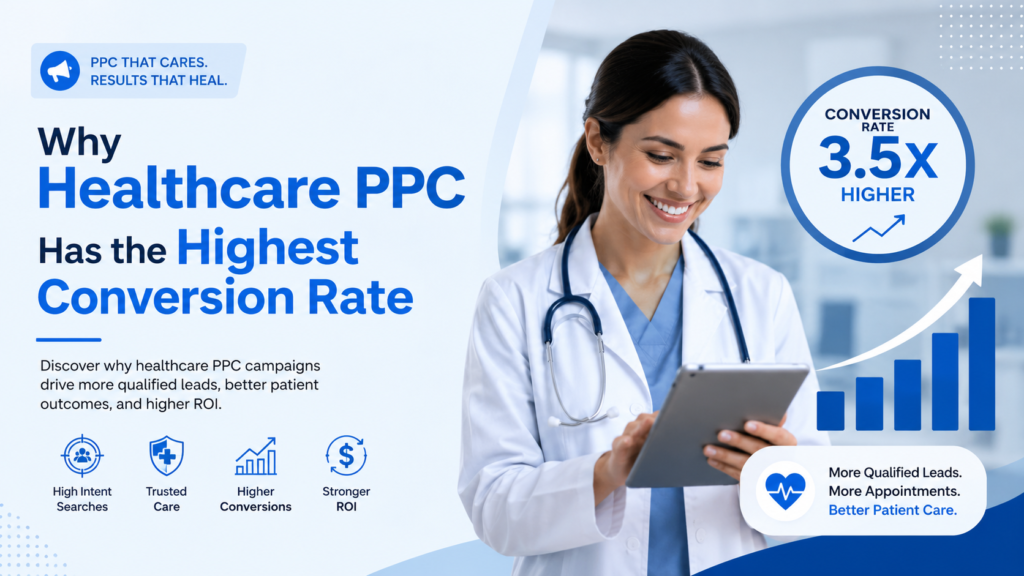
Why Healthcare PPC Has the Highest Conversion Rate
Why Healthcare PPC Has the Highest Conversion Rate | Minmini Digital Marketing Healthcare PPC Guide 2026 Why Healthcare PPC Has the Highest Conversion Rate in Digital Marketing Patients searching Google for medical care are already decided. Learn how pay-per-click advertising connects your hospital with high-intent patients at the exact moment they need you. Start Your Campaign → Read the Guide 3× Higher Conversion 50% Mobile Searches 24h Live Results Scroll 🎯 High-Intent TargetingReach patients actively searching for care 📊 Measurable ROITrack every click, call, and appointment 📍 Location-BasedTarget patients within your service area ⚡ Immediate VisibilityGo live at the top of Google within hours Understanding PPC What Is Healthcare PPC Advertising? Healthcare PPC (Pay-Per-Click) is a digital advertising model where hospitals, clinics, and healthcare professionals pay only when someone clicks on their advertisement. Unlike traditional ads that broadcast to everyone, PPC targets patients who are already searching for medical solutions. These highly targeted ads appear across Google’s ecosystem the moment a patient searches for care — connecting your practice with patients at the precise moment of need. Google Search Google Maps YouTube Display Network Local Listings Mobile Search 🔍 Best cardiologist in Madurai AD Top Cardiologist in Madurai – Book Today 🌐 www.yourhospital.in/cardiology Expert heart care specialists available now. Same-day consultations. Call or book online instantly. AD Experienced Heart Specialist – Madurai Clinic 🌐 www.heartcare-madurai.in 20+ years of cardiac expertise. Advanced diagnostics. Insurance accepted. Book your appointment now. 📌 Organic results below… Why It Works 4 Reasons Healthcare PPC Delivers Exceptional Conversion Rates PPC advertising consistently outperforms other digital channels in healthcare because it meets patients at the most critical moment — when they are actively searching for medical help. 01 🎯 Patients Already Have High Intent Someone browsing social media is scrolling for entertainment. But someone searching “Best ENT doctor near me” has already decided they need care. Healthcare PPC captures this existing demand — you’re not creating a need, you’re answering one. High-intent users convert faster because the decision is already made. 02 ⚡ Immediate Visibility Where It Counts SEO builds long-term authority but takes months to generate results. Google Ads delivers immediate visibility at the top of search results within hours of launching a campaign. This instant exposure is especially valuable for newly opened hospitals, specialty clinics launching new treatments, or seasonal health campaigns. 03 📍 Local Patients Are Easier to Reach Healthcare is inherently location-based. Patients want providers within a reasonable distance. Google Ads allows precise targeting by city, ZIP code, neighbourhood, or a defined radius around your facility. Your budget reaches only patients who can realistically travel to you — eliminating wasted spend on unreachable audiences. 04 📱 Mobile Search Dominates Healthcare More than half of all healthcare searches now happen on smartphones — at work, at home, or during emergencies. Google Ads are fully optimised for mobile, letting patients call directly, get directions, book appointments, or submit enquiry forms in seconds. This seamless experience dramatically increases conversion rates. Patient Funnel PPC Targets Patients at Every Stage of Their Journey Healthcare PPC is not limited to emergencies. Smart campaigns reach patients at every stage — from early research through to booking an appointment. 🌱 Awareness Stage Learning & Discovering Causes of knee pain Diabetes symptoms Pregnancy care tips Signs of heart disease When to see a neurologist 🔍 Consideration Stage Comparing & Evaluating Best orthopedic hospital IVF success rate Top neurologist in city Cardiology hospital reviews Knee replacement cost ✅ Decision Stage Ready to Convert Book orthopedic appointment Emergency hospital near me MRI scan today IVF clinic appointment ENT specialist consultation Key Advantages Core Benefits of Healthcare PPC Advertising PPC delivers measurable, controllable, and flexible results that traditional advertising simply cannot match. 📅 Increased Appointment Bookings Well-designed campaigns generate phone calls, online bookings, WhatsApp enquiries, and contact form submissions — each representing a qualified lead with genuine interest in your services. 💰 Complete Budget Control Unlike traditional advertising, PPC gives hospitals full control over daily budgets, monthly spend caps, cost per click, geographic reach, and ad schedules. Campaigns can be adjusted in real time based on performance. 📈 Fully Measurable Results Track clicks, calls, form submissions, appointment requests, cost per patient acquisition, and return on investment. This data enables continuous optimisation and accountability that print and broadcast media cannot offer. 🏥 Department-Level Campaigns Run targeted campaigns for Orthopedics, Cardiology, Pediatrics, Gynecology, Oncology, Dental Care, IVF, Emergency Services, and Health Check Packages — each with customised messaging and dedicated budgets. 🔄 Remarketing Opportunities Many patients visit your site but don’t book immediately. Remarketing campaigns reconnect with these visitors, reminding them about your consultations, health packages, and specialised treatments to increase conversions. 🤝 Builds Patient Trust Healthcare decisions are emotional. Effective PPC campaigns build trust by showcasing expert doctor profiles, patient reviews, certifications, and hospital accreditations — reducing hesitation and encouraging appointments. The Comparison Google Ads vs. Traditional Advertising Traditional channels reach broad audiences regardless of need. PPC reaches patients precisely when they are actively searching for medical care. Feature Google Ads (PPC) Newspaper / TV Billboards Targets active patients ✓ ✗ ✗ Immediate go-live ✓ ~ ✗ Pay only for results ✓ ✗ ✗ Geographic precision ✓ ~ ~ Measurable ROI ✓ ✗ ✗ Real-time optimisation ✓ ✗ ✗ Mobile-optimised ✓ ✗ ✗ Keyword Strategy Choosing the Right Keywords Keyword selection determines the success of your entire campaign. The right words connect you to patients who are ready to book — not just browsing. Best orthopedic doctor IVF clinic near me Emergency hospital Knee replacement surgeon ENT specialist near me Heart specialist Madurai Pediatric hospital Spine specialist Book appointment today Gynecologist consultation Cancer treatment center MRI scan Dental surgeon Neurologist near me 💡 Pro Tip: High-converting healthcare keywords combine a specialty + location + intent signal — for example: “Best orthopedic surgeon in Madurai book appointment.” These three-part phrases reflect what a ready patient actually types. Common Mistakes to Avoid Pitfalls That Kill Campaign Performance Even well-funded campaigns fail when these foundational mistakes are overlooked.