
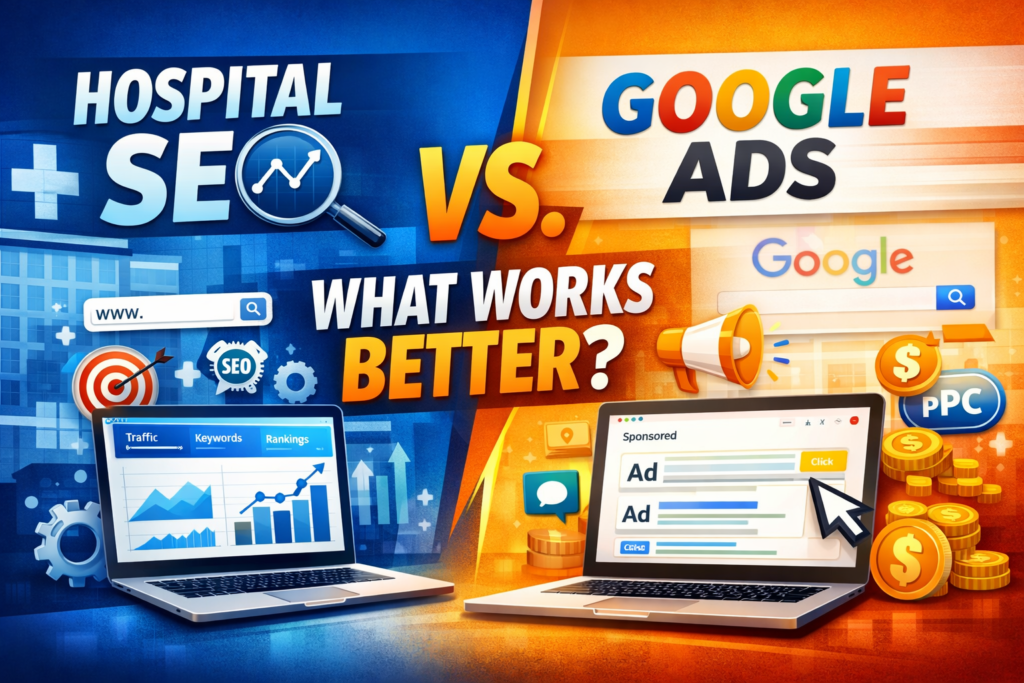
Hospital SEO vs Google Ads – What Works Better?
Hospitals today depend heavily on online visibility to attract new patients. When people search for treatments, doctors, or emergency care, they usually turn to Google. This brings up an important question for hospitals: Should you invest in SEO or Google Ads? Both are powerful, but they work in very different ways. What Is Hospital SEO? SEO (Search Engine Optimization) helps your hospital website rank organically on Google for searches like best hospital in Madurai, heart specialist near me, or 24/7 emergency hospital. SEO focuses on website content, local keywords, Google Business Profile optimization, and patient-friendly information. Benefits of SEO: Long-term and sustainable results Builds trust and credibility Lower cost over time Brings consistent patient inquiries SEO is ideal for hospitals looking for steady growth and long-term online authority. What Are Google Ads? Google Ads place your hospital at the top of search results instantly. These are paid ads that appear when someone searches for specific treatments or services. Benefits of Google Ads: Immediate visibility Best for emergencies and urgent treatments Highly targeted by location, service, and time Quick lead generation Google Ads work best when hospitals need fast results, seasonal promotions, or emergency-related visibility. SEO vs Google Ads – Which Is Better? There is no single “better” option—it depends on your hospital’s goals. If you want long-term patient flow, SEO is the better choice. If you need instant leads and quick visibility, Google Ads work faster. SEO builds trust, while Ads bring speed. The Best Strategy: Use Both The most successful hospitals use SEO + Google Ads together. Ads generate immediate patient inquiries, while SEO builds strong online presence over time. This balanced approach ensures both short-term results and long-term growth. Conclusion For hospitals, SEO and Google Ads are not competitors—they are partners. Combining both helps hospitals stay visible, trusted, and competitive in today’s digital healthcare landscape.