Minmini Healthcare Digital Marketing

Author name: 365needs2022@gmail.com

local SEO for hospitals
Uncategorized

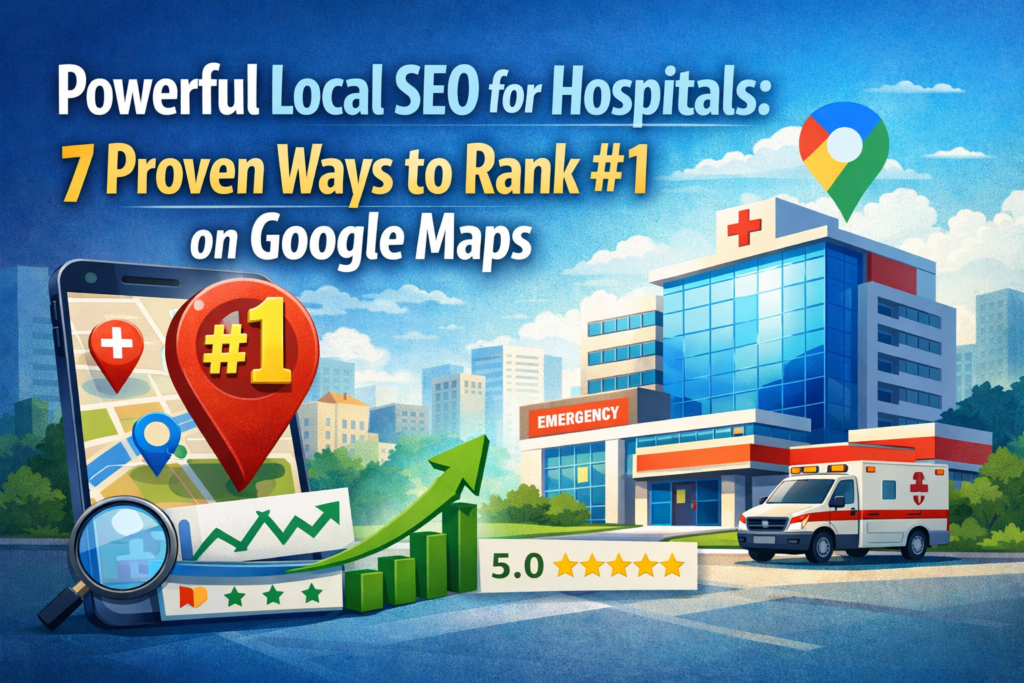
Powerful Local SEO for Hospitals: 7 Proven Ways to Rank #1 on Google Maps

Local SEO for Hospitals — 7 Proven Ways to Rank #1 on Google Maps 2026 Local SEO for Hospitals · 2026 Guide 7 Proven Ways HospitalsCan Rank #1 onGoogle Maps A futuristic SEO playbook to help hospitals dominate local search results, attract more patients, and grow in 2026. 8 min read Updated 2026 7 Proven Strategies AI-Powered Insights Google Maps Local Keywords SEO Content Backlinks Patient Reviews Mobile SEO Dept. Pages Blog Content AI SEARCH RANK #1 GOOGLE MAPS +75% VISITS LOCAL PATIENTS 7 STRATEGIES PROVEN 2026 ORGANIC SEO ZERO AD SPEND AI-POWERED HEALTHCARE SEO NETWORK · MADURAI 2026 🤖 AI Healthcare SEO Network Visualization Contents Why Local SEO Matters Google Business Profile City-Based Keywords Department SEO Pages Google Reviews Healthcare Blog Content Local Backlinks Mobile-Friendly Website Today, most patients search online before visiting a hospital. When someone searches “hospital near me” or “best ENT hospital in Madurai”, Google shows local results and Google Maps first. If your hospital does not appear in those results, you are losing potential patients to competitors. This is why local SEO for hospitals is extremely important — it directly increases appointments and patient visits. 70%Healthcare searches on mobile devices #1Maps position drives most walk-ins 7Proven strategies in this guide 01 Google Business ProfileOptimize Your Google Business Profile One of the most important steps in hospital local SEO is optimizing your listing on Google Business Profile. This profile appears in Google Maps and local search results whenever patients search for nearby hospitals. Hospital name, address, and precise location pin Phone number and website link Opening hours including emergency hours Correct hospital category and services listed High-quality photos — building, doctors, reception, facilities A well-optimized Google Business Profile is the single most impactful step a hospital can take to appear in the Google Maps top 3 results. 02 Keyword StrategyUse City-Based Keywords Local keywords play a huge role in healthcare local SEO. Patients search for hospitals using location-specific terms. Including them naturally in your content helps search engines understand where you operate. Best hospital in Madurai ENT hospital in Madurai Kidney hospital in Madurai Diabetes treatment Madurai Website headings and page titles Blog articles and service descriptions Meta descriptions and image alt text 03 Website ArchitectureCreate Separate SEO Pages for Each Department Many hospitals make the mistake of having a single webpage for all medical services. Search engines rank websites better when each service has its own dedicated, detailed page. Cardiology Hospital in Madurai Orthopedic Hospital in Madurai ENT Hospital in Madurai Gynecology Hospital in Madurai Nephrology Hospital in Madurai Each page should include detailed information about treatments, doctors, facilities, and patient benefits to improve both user experience and SEO performance. 04 Reputation ManagementCollect Positive Google Reviews Online reviews strongly influence Google Maps rankings. Hospitals with more positive reviews appear higher in search results because reviews increase credibility and trust signals to Google. Send review links via SMS after successful treatment Place QR codes at reception and discharge desks Ask patients politely after a positive consultation Respond professionally to all reviews — positive and negative Positive reviews not only improve search rankings but also give new patients the confidence to choose your hospital over every competitor. 05 Content MarketingPublish Local Healthcare Blog Content Regular blogging is a powerful strategy for improving hospital local SEO. Healthcare blogs help hospitals answer patient questions and appear in more search results consistently over time. Early symptoms of kidney disease Diabetes prevention tips Heart health tips for adults When to visit an ENT specialist? Best foods for heart patients Signs you need orthopedic care When hospitals publish helpful blog content, search engines recognize the website as an authority in healthcare information — increasing traffic and attracting more potential patients. 06 Authority BuildingBuild Local Backlinks Backlinks are links from other websites pointing to your hospital website. They act as trust signals for search engines, helping your website rank higher in search results. Local news websites and media outlets Healthcare directories and medical portals Medical associations and health boards Local business listings and city directories Health blogs and wellness publications 🔎Google Search ConsoleTrack impressions, clicks & backlinks 📊Google AnalyticsMonitor traffic sources & behavior 07 Technical SEOMake Your Website Mobile Friendly More than 70% of healthcare searches happen on mobile devices. If your hospital website is slow or difficult to use on smartphones, users will leave immediately — hurting rankings and losing patients. ⚡Fast Loading 📱Responsive Design 🧭Easy Navigation 📞Click-to-Call 📋Appointment Forms Google’s mobile-first indexing means your mobile site is what gets ranked — a fast, responsive hospital site is non-negotiable in 2026. Final Thoughts Start Ranking Higher in Local Search Today Local SEO has become one of the most effective digital marketing strategies for hospitals. When implemented correctly, it helps hospitals appear in Google Maps, local search results, and nearby patient searches. Hospitals that invest in local SEO today will attract more local patients and build stronger trust in their community. Google Maps Top 3 More Local Patients Stronger Community Trust Higher Appointment Rates Long-Term Organic Growth Zero Ongoing Ad Spend Ready to Dominate Local Search? Hospitals that invest in local SEO today will attract more patients and build stronger trust in their community. Let’s get started. Get Started with Healthcare SEO →
Blogs

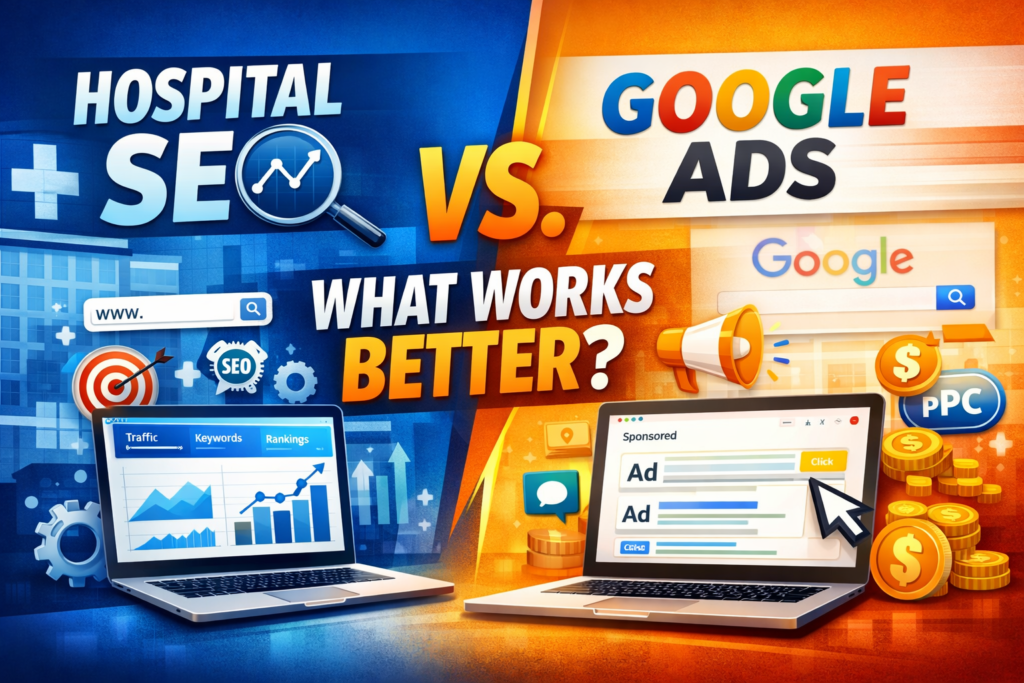
Hospital SEO vs Google Ads – What Works Better?

Hospitals today depend heavily on online visibility to attract new patients. When people search for treatments, doctors, or emergency care, they usually turn to Google. This brings up an important question for hospitals: Should you invest in SEO or Google Ads? Both are powerful, but they work in very different ways. What Is Hospital SEO? SEO (Search Engine Optimization) helps your hospital website rank organically on Google for searches like best hospital in Madurai, heart specialist near me, or 24/7 emergency hospital. SEO focuses on website content, local keywords, Google Business Profile optimization, and patient-friendly information. Benefits of SEO: Long-term and sustainable results Builds trust and credibility Lower cost over time Brings consistent patient inquiries SEO is ideal for hospitals looking for steady growth and long-term online authority. What Are Google Ads? Google Ads place your hospital at the top of search results instantly. These are paid ads that appear when someone searches for specific treatments or services. Benefits of Google Ads: Immediate visibility Best for emergencies and urgent treatments Highly targeted by location, service, and time Quick lead generation Google Ads work best when hospitals need fast results, seasonal promotions, or emergency-related visibility. SEO vs Google Ads – Which Is Better? There is no single “better” option—it depends on your hospital’s goals. If you want long-term patient flow, SEO is the better choice. If you need instant leads and quick visibility, Google Ads work faster. SEO builds trust, while Ads bring speed. The Best Strategy: Use Both The most successful hospitals use SEO + Google Ads together. Ads generate immediate patient inquiries, while SEO builds strong online presence over time. This balanced approach ensures both short-term results and long-term growth. Conclusion For hospitals, SEO and Google Ads are not competitors—they are partners. Combining both helps hospitals stay visible, trusted, and competitive in today’s digital healthcare landscape.

Blogs

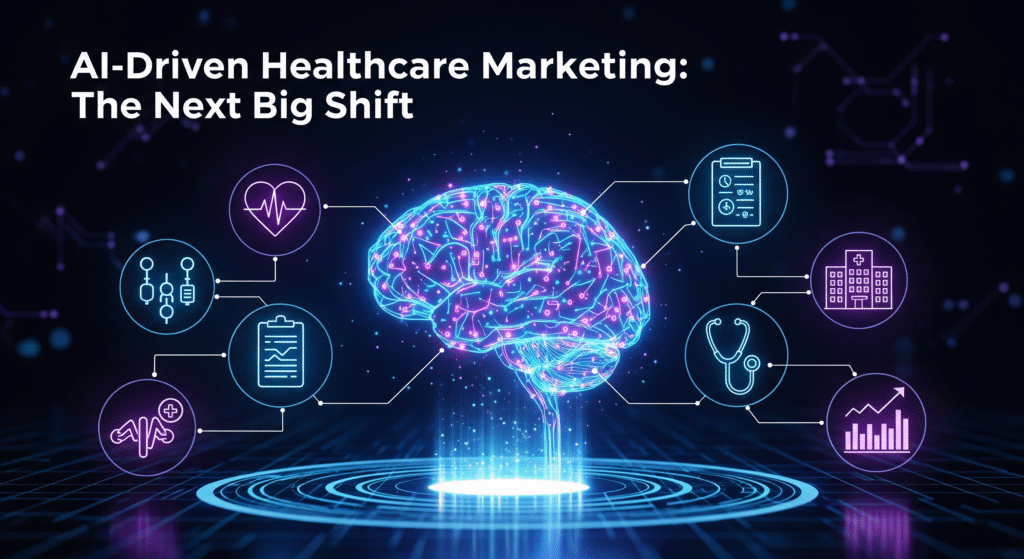
Major Trend Ahead: Hyper-Personalized, AI-Powered & Data-Driven Patient-Centred Marketing

Major Trend Ahead: Hyper-Personalized, AI-Powered & Data-Driven Patient-Centred Marketing Why This Trend Will Dominate The global healthcare digital marketing sector is growing rapidly as hospitals and clinics adopt advanced technologies like AI, data analytics, and immersive media (AR/VR). These tools help providers communicate more effectively and build deeper patient trust. Patients today expect personalized experiences — from the ads they see to the care they receive. Tailored communication based on their needs, history, age, interests, and location is becoming the new standard. AI is transforming healthcare marketing by enhancing ad targeting, content personalization, scheduling, patient follow-ups, and even creative generation such as visuals and videos. Additionally, more than 65% of patients now search online before choosing a doctor, making digital presence, reputation management, and fast responses absolutely essential. 🧠 What “Personalized + AI-Powered” Means in Practice 1️⃣ Customized Patient Journeys Marketing will shift from generic messages to highly segmented campaigns — targeting groups like diabetic patients, expectant mothers, heart patients, mental health seekers, seniors, rural audiences, etc. 2️⃣ AI-Driven Chatbots & Virtual Assistants 24/7 automated support for appointment booking, FAQs, basic medical guidance, and website queries — creating a seamless first interaction. 3️⃣ Predictive & Behavioral Marketing Using patient data and analytics to deliver timely alerts, preventive check-up reminders, follow-up messages, and relevant content. 4️⃣ Rich Multimedia Content Videos, AR/VR demos, and interactive visuals will play a major role in explaining treatments, showcasing facilities, and building emotional engagement. 5️⃣ Strong Omnichannel Presence Hospitals must stay visible across websites, social media, search engines, tele-consultation apps, and review platforms to stay competitive. 🎯 Why This Trend Fits Minmini Digital Marketing Perfectly Your agency is already focused on healthcare — which puts you ahead of the curve. Here’s how you can capitalize: ✔️ Offer AI-Enhanced Marketing Solutions Chatbots, automated workflows, personalized patient journeys, and smart ad targeting for clinics and hospitals. ✔️ Data-Driven Campaign Segmentation Create customized campaigns for multi-specialty hospitals, single-specialty clinics, diagnostic centers, and wellness facilities. ✔️ Combine Creativity + Technology Use your strong video editing, design, and content skills alongside AI tools to produce high-impact campaigns. ✔️ Build Long-Term Patient Relationships Design follow-up systems, educational content, appointment reminders, testimonials, and retention-focused marketing. ⚠️ Challenges to Keep in Mind • Data Privacy & Compliance Patient data must be handled with strict consent, security, and transparency. • Maintaining Medical Credibility AI content must remain accurate, empathetic, and trustworthy. • Technology Barriers for Small Clinics You may need to support clinics that lack digital infrastructure by providing simplified, scalable solutions. 🎯 5-Year Prediction: “Smart, Compassionate, Patient-First Digital Healthcare Marketing” In the next five years, healthcare marketing will evolve from simply promoting services to building meaningful patient-provider relationships. Future-ready marketing will focus on: Supporting patients throughout their healthcare journey Delivering value through education and preventive care Establishing long-term trust Using AI + data without losing empathy Agencies that blend medical understanding + creativity + technology will lead the future of healthcare marketing.

Scroll to Top